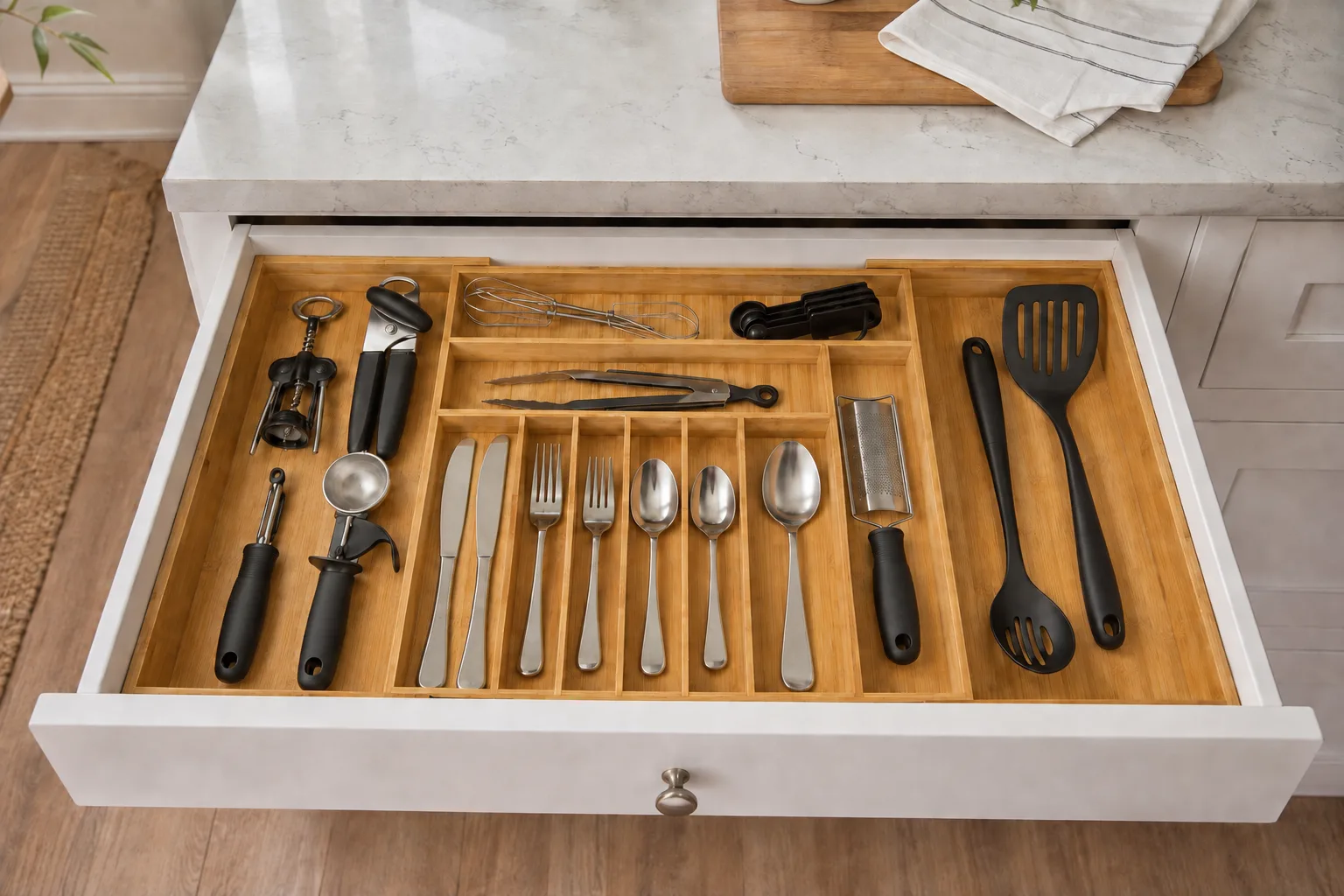
KitchenEdge Drawer Organizer: Measure Depth First, Then Width
Measure drawer depth before width. Specs-only fit guide for the KitchenEdge expandable bamboo utensil organizer — depth, width range, and when to fork.
As an Amazon Associate I earn from qualifying purchases. Buying through this link may earn us a commission at no extra cost to you.
Save this fit checkCheck current price on Amazon Opens Amazon · confirm the selected variant and dimensionsKitchenEdge Expandable Bamboo Drawer Organizer
Expandable bamboo utensil tray with fixed depth and adjustable width. Buy it when your tape measure already matches the depth-first, then-width ranges below.
| Depth × height | 17.4 in D × 2.7 in H |
|---|---|
| Width (expandable) | 18.5–33 in |
| Min drawer depth | ~17.5 in |
| Compartments | ~11 |
| Material | Bamboo |
| Feet / grip | Non-slip pads |
Specs from Amazon listing, verified September 5, 2026.
Tape measure before checkout
Measure first. Then decide.
Use a tape measure inside the drawer box, not on the front panel.
Clear interior depth.
Measure from the inside of the drawer face (or false front) back to the rear wall. Listing depth is 17.4 inches; plan on a minimum drawer depth of about 17.5 inches so the tray seats fully. If your clear depth is shorter, the tray will stick past the face or sit angled on the floor of the drawer.
Clear interior width.
Measure left wall to right wall at the height where the tray will sit. Note the narrowest point if drawer slides or soft-close hardware steal edge space. This unit expands from 18.5 to 33 inches wide. Under 18.5 inches, it will not fit closed. Past 33 inches, it will not span the full bay.
Height under the counter / drawer opening.
Listing height is 2.7 inches. Measure from the drawer floor to the underside of the counter or the drawer-stop lip. Leave clearance for utensil handles that stick up above the tray walls.
Soft-close and slide hardware.
Open the drawer fully. Soft-close dampers and thick side slides eat width and sometimes depth at the face. Re-check clear width and depth with the drawer in its real open position.
What you actually store.
Flatware only vs spatulas and serving tools changes how many of the ~11 compartments you need. If you mostly need a few deep wells for large tools, a simpler expandable fork may be enough.
Write the numbers down. If depth or width fails the listing range, skip this SKU and look at the forks.
A closer look
One pick. 6 views.
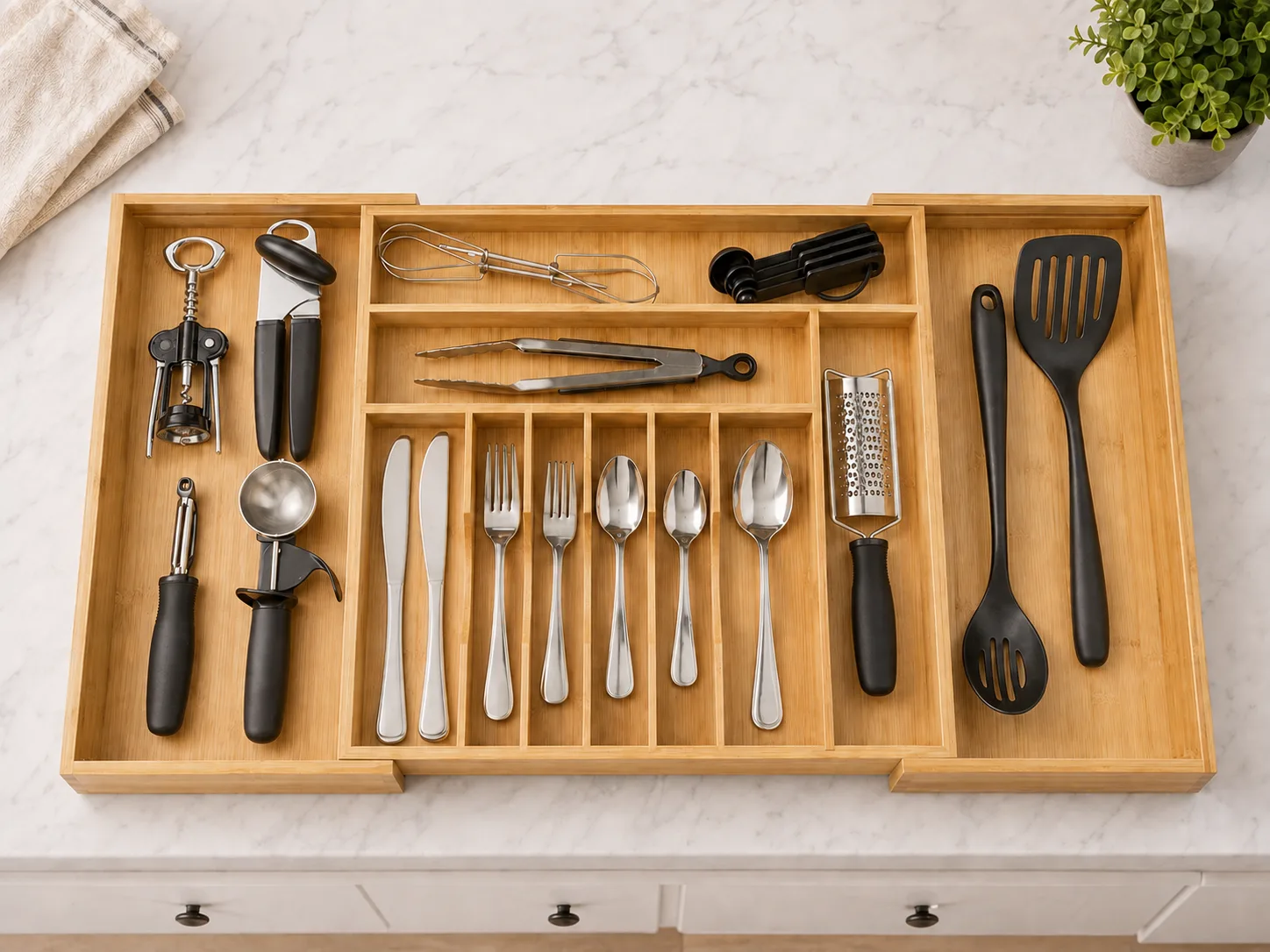
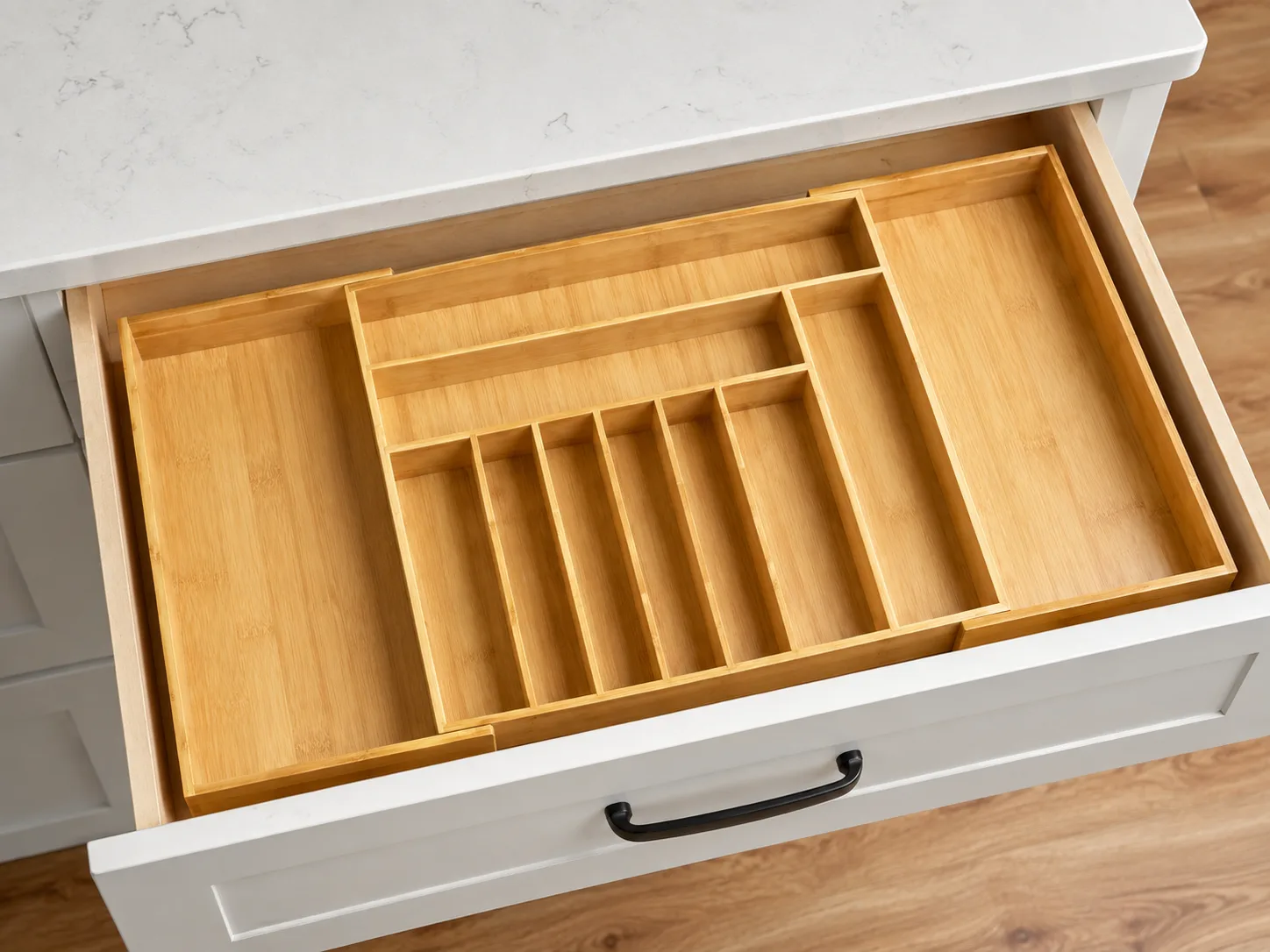
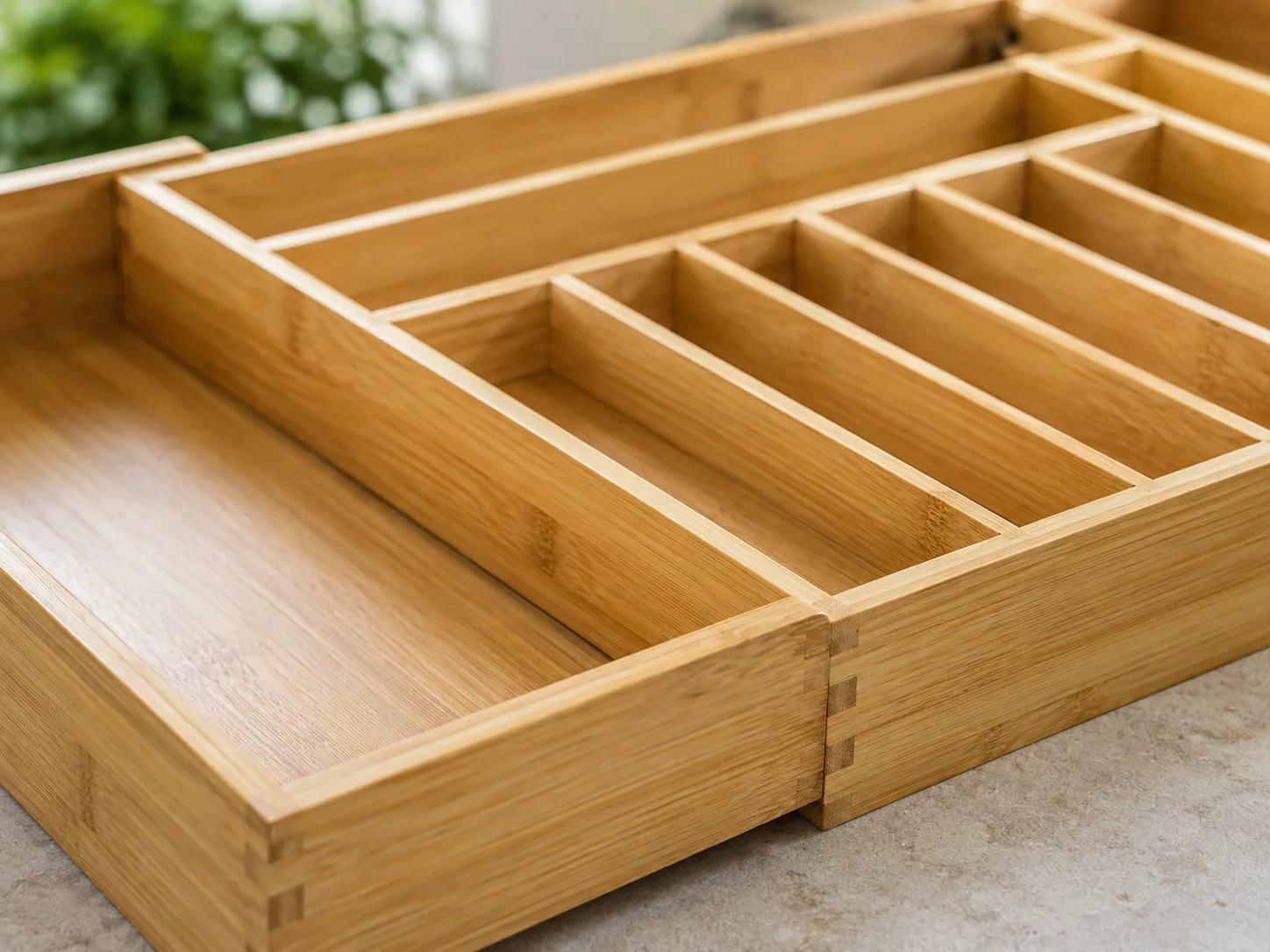
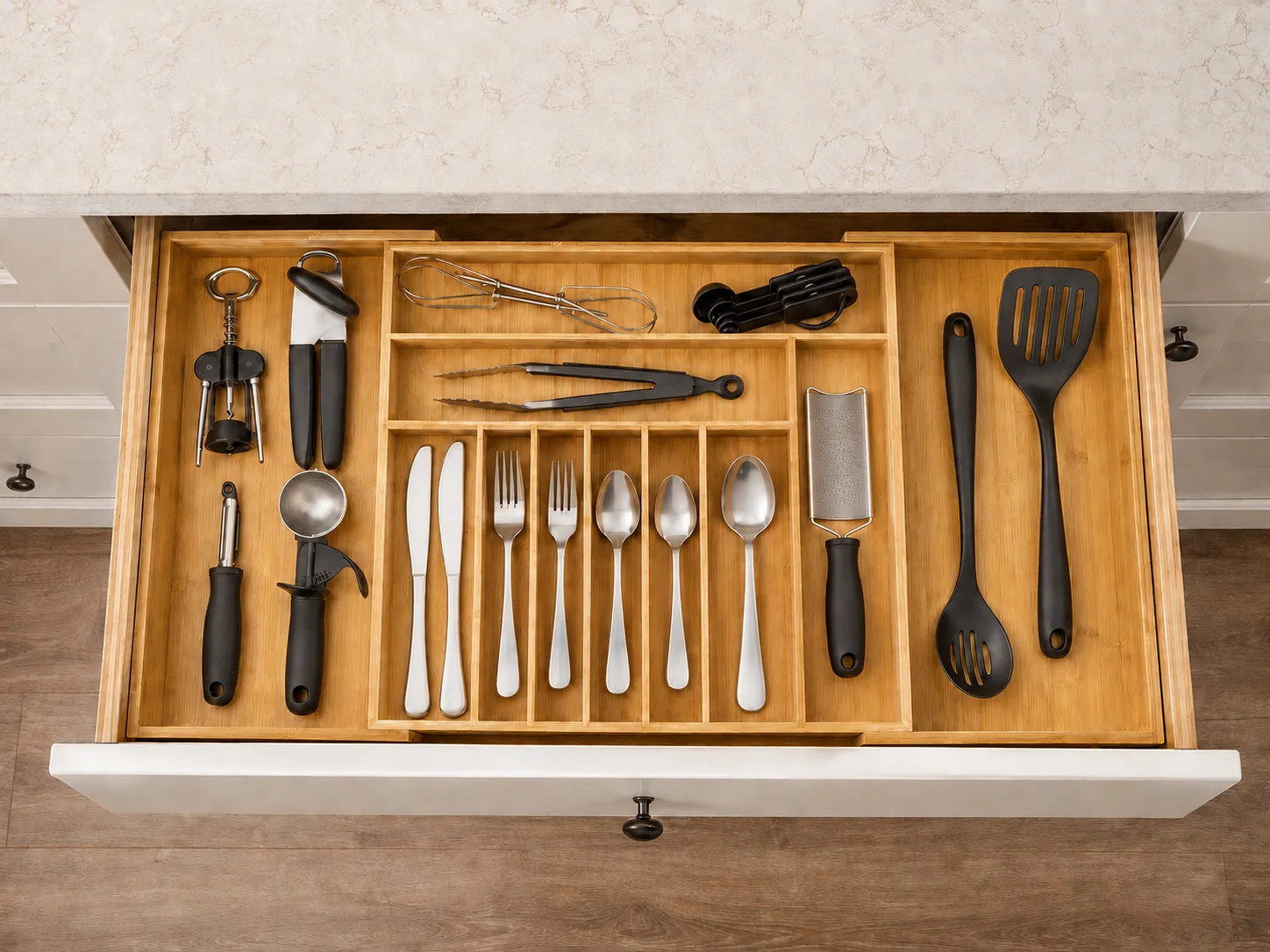
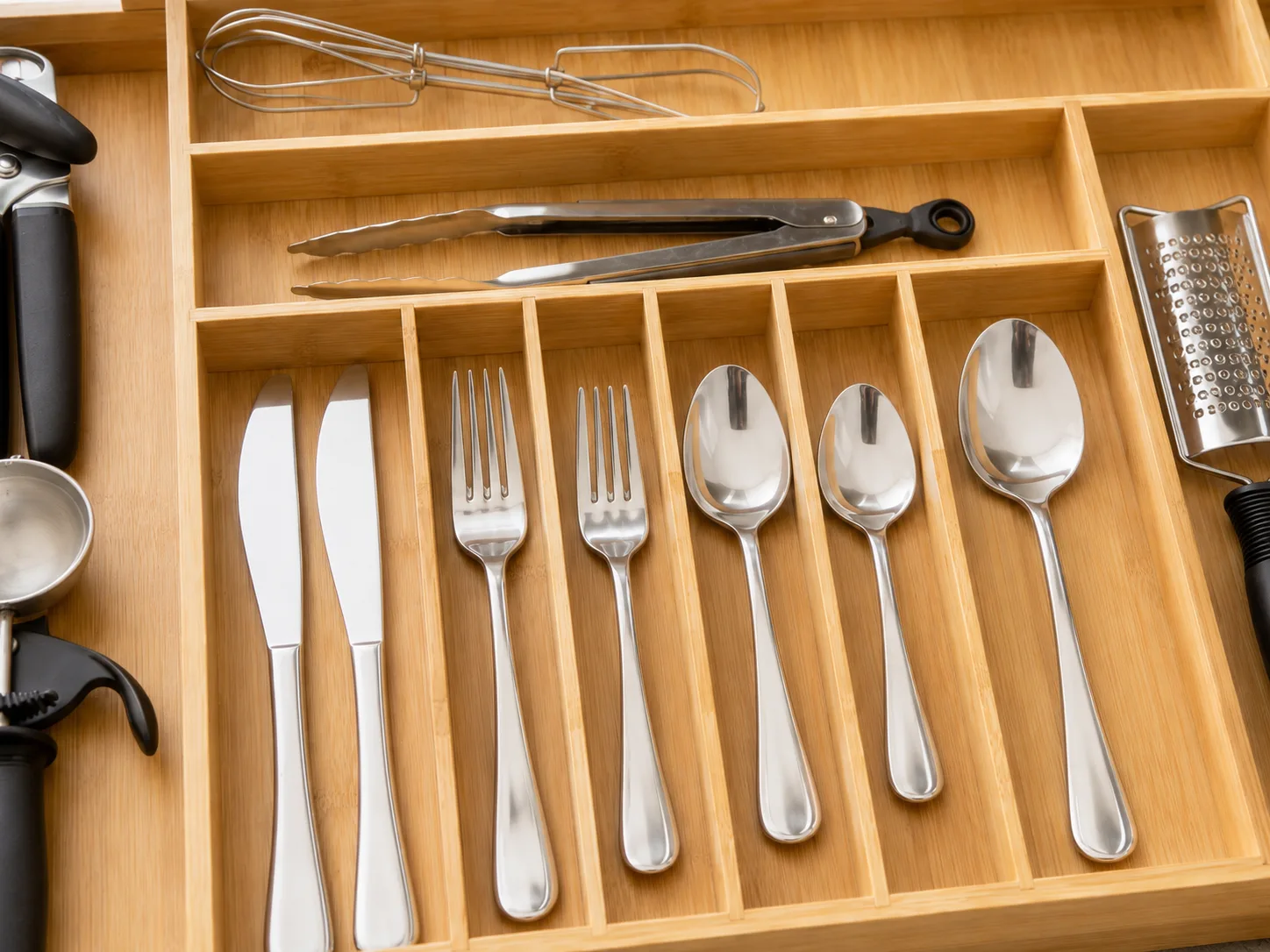
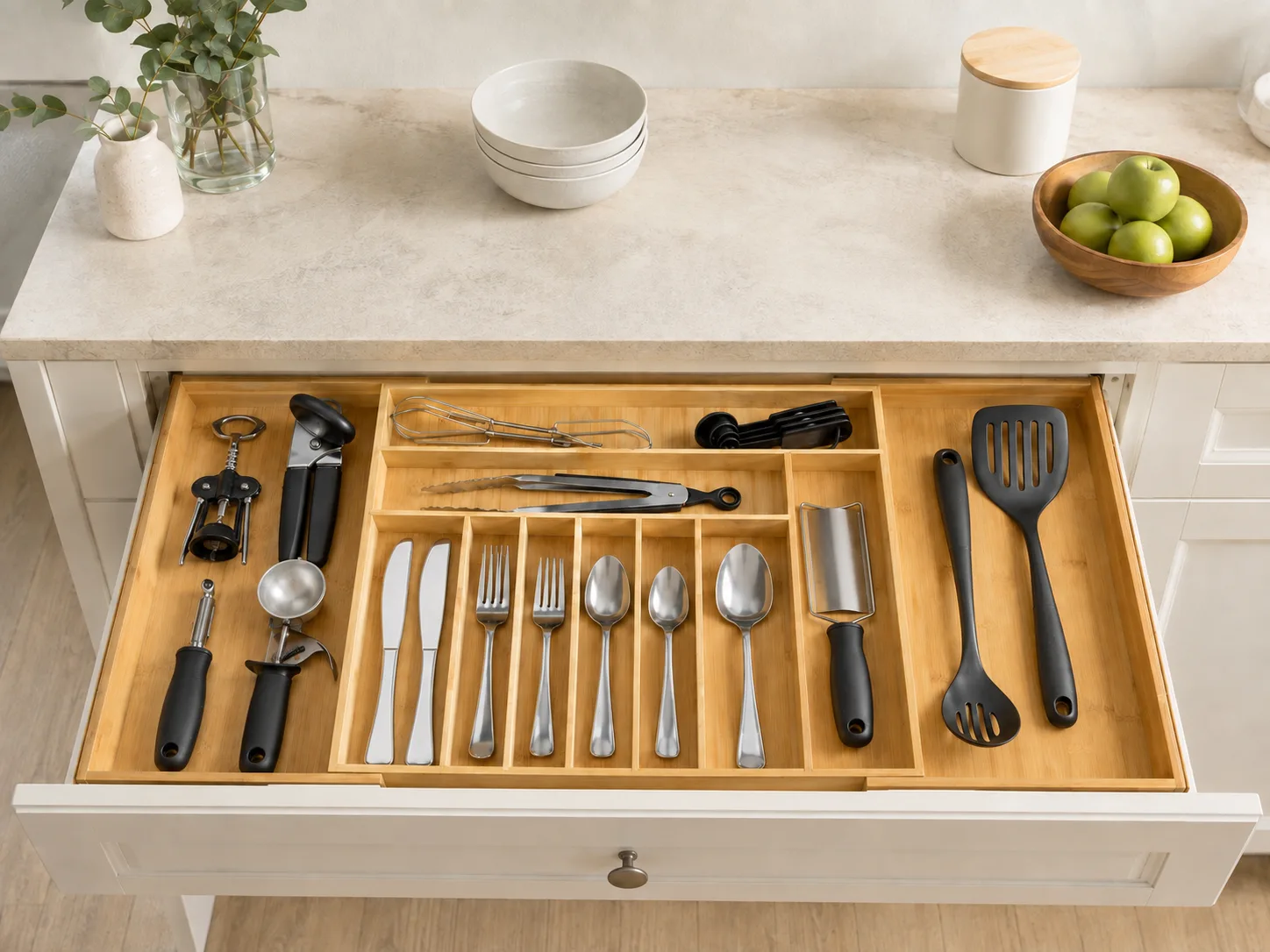
Most drawer organizers fail for one reason: shoppers match width from a photo and skip depth. The tray looks right in the listing. Then it sits proud of the drawer face, blocks the soft-close damper, or never seats flat because the drawer box is shorter than the tray.
This is a specs-first fit check for one expandable bamboo utensil tray: the KitchenEdge drawer organizer (ASIN B07GJLM5PS). Measure depth first. Then width. Then decide if this shape is for you — or if you need a different fork.
How the expandable bamboo tray works
This is a bamboo expandable utensil organizer. Depth is fixed at 17.4 inches; width adjusts across 18.5–33 inches. Height is 2.7 inches. The layout gives roughly 11 compartments for flatware and small tools. Non-slip pads on the underside help the tray stay put when you open and close the drawer.
That is the fit mechanism — fixed depth, expandable width, low profile. It is not a deep cutlery chest and not a knife block. Bamboo wants a dry drawer; it is not the wet-zone fork.
Load the compartments to match how you cook: forks and spoons in the narrow wells, spatulas and tongs in the longer ones. Expanding the frame only changes width span; it does not add depth.
Only if this pick doesn’t fit
When to fork to a different shape
Shallower drawer or plastic preference. If depth is under ~17.5 inches or you want a wipe-clean plastic tray instead of bamboo, look at an expandable plastic organizer such as Lifewit (Amazon listing B0BTBT4YFR) — still measure depth and width; material and profile are the reasons to switch, not a guarantee of fit.
Different expandable bamboo layout. If you like bamboo but need another compartment map or footprint, Pipishell expandable bamboo (Amazon listing B07SRV3SN8) is the alternate bamboo fork. Compare its depth and width range to your drawer before you buy.
Tagged links above are optional outbound checks only. The shortlisted pick remains KitchenEdge when your measurements already match.
The bottom line
Let the fit decide.
Measure depth first, then width, then height clearance. Match the expandable bamboo tray only when those numbers fit. Skip it for shallow drawers or wet-zone plastic needs, and use the Lifewit or Pipishell forks instead. Specs decide this category; product photos do not.
Check current price on Amazon Confirm fit, variant, and included parts before buying.